
Dimensions, aisles and real examples to lay out your Reformer room without losing comfort or safety.
It is the first question almost everyone opening a studio asks us. The answer depends on the shape of the premises, but there are figures that work as a starting point.
Machine dimensions
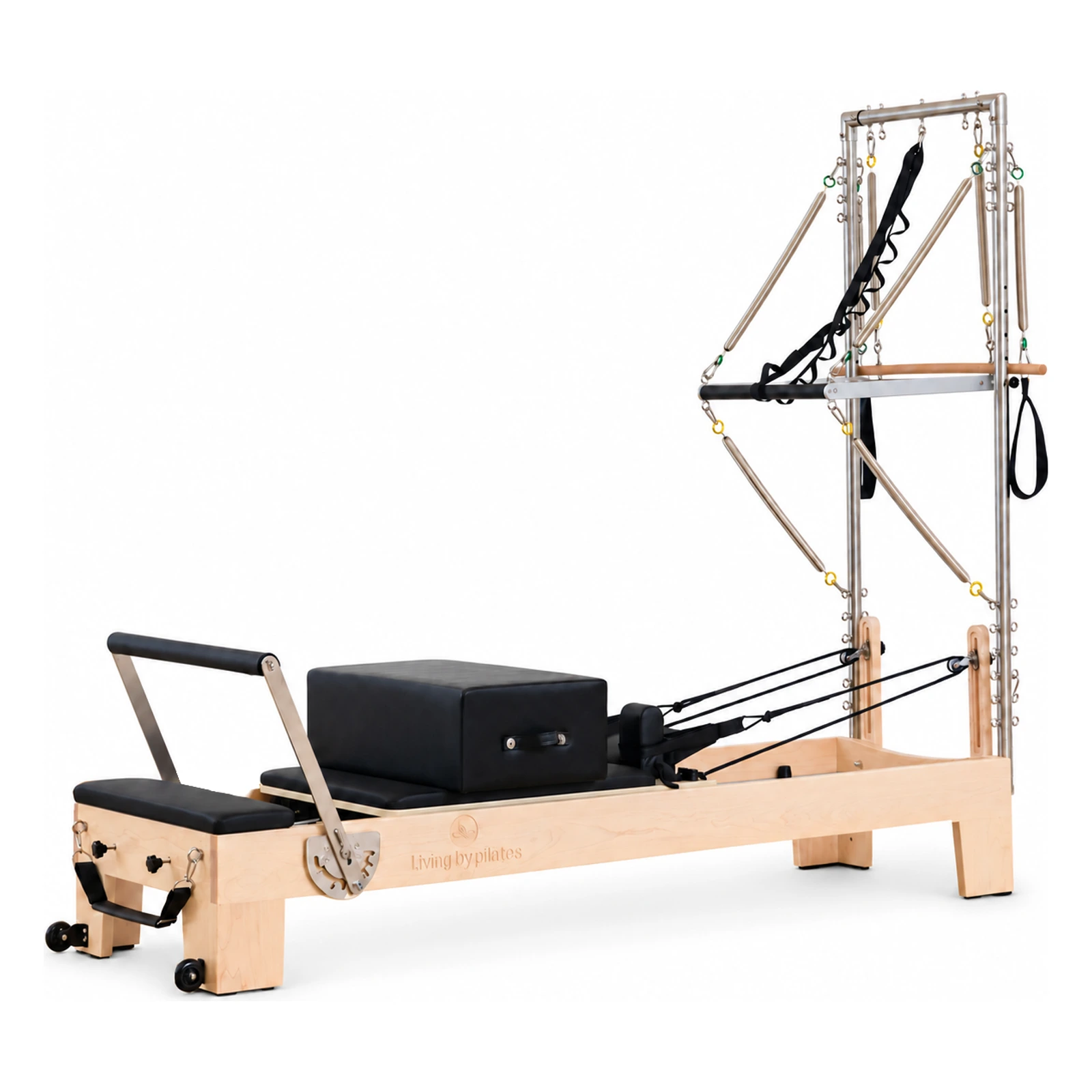
A Reformer takes up about 235 × 70 cm. The Cadillac Reformer is slightly wider (about 235 × 74 cm) and, with its tower, reaches about 200 cm in height.
Aisles: the key to a comfortable room
We recommend leaving about 80 cm between machines and also between the end machines and the wall, plus 1 m clear at one end of the machine. That way the instructor can move around, correct and assist, and students get on and off safely. Taking 74 cm of width to allow some margin, each Reformer needs a strip of about 1.54 × 3.35 m, or about 5.2 m², plus about 2.7 m² for the aisle along the wall.
Rough examples
- 30 m²: 5 Reformers.
- 45 m²: 8 Reformers.
- 60 m²: 11 Reformers.
- 75 m²: about 12 to 14 Reformers, depending on whether they go in one or two rows.
These are usable-area figures. Columns, doors, windows or a reception area change the result, so it is always worth studying the floor plan.
* Rough estimate: Reformers in a row, with 80 cm between machines and to the wall, and 1 m clear at one end. The actual space depends on the shape of the room (squarer or longer), columns, doors and windows, and how you plan to use it.
Rows, orientation and mirrors
The usual layout is machines in parallel, in one or two rows, facing the instructor. If there is a mirror, students should be able to see it from the side or the front without bumping into the machine ahead.
We’ll plan your layout
Send us your dimensions or floor plan and we’ll propose, with no obligation, the layout that makes the most of your space, with the right number of machines and combination of models for your classes.
Tell us about your project and we’ll prepare a tailored proposal
Free, no-obligation advice. Send us your room dimensions and we’ll suggest equipment, layout and lead times.
Keep reading
← Back to blog
How to set up a Pilates studio: the steps from idea to first class
Class type, premises, equipment, lead times and installation: a practical guide from people who equip studios and teach.
How to choose a Pilates Reformer for your studio: complete guide
With or without tower, oak or beech, springs, dimensions and space: everything to check before buying a professional Reformer.

Benefits of equipment-based Pilates: why your students love the Reformer
Strength, control, posture and mobility: what spring-based work adds compared with mat Pilates.